OUR PROGRAMMES
Helping Caribbean communities adapt to climate change through healthy marine and coastal ecosystems, delivered through our Ecosystem-based Adaptation (EbA) Facility.
Photo: Denise Speck
PROGRAMME OVERVIEW
The Caribbean's natural capital and people face growing threats from climate change and unsustainable development. Ecosystem-based Adaptation (EbA) uses biodiversity and healthy ecosystems to help people adapt to these impacts.
Our Climate Change Programme delivers the EbA Facility, which supports effective adaptation in the marine and coastal zone of the insular Caribbean. As part of a broader adaptation strategy, EbA offers resilient, cost effective ways to reduce climate impacts by connecting the sustainable use of biodiversity and ecosystem services with community well-being.
Les ouragans et les tempêtes sont de plus en plus fréquents et violents, causant des dégâts dévastateurs aux communautés côtières et aux infrastructures.
The ocean's chemistry is changing, harming marine life like coral reefs, which are crucial for coastal protection and biodiversity.
Coastal areas face increased flooding and erosion, threatening homes, businesses and vital ecosystems.
Waste and unsustainable fishing practices damage delicate marine ecosystems and threaten food security.
Protéger les récifs coralliens, les mangroves et autres écosystèmes essentiels qui constituent des barrières naturelles contre les tempêtes, les inondations et l'érosion côtière.
Supporting approaches that safeguard biodiversity, maintain ecosystem services and encourage sustainable use of natural resources.
Helping communities adapt to changing environmental conditions while building long term resilience and a more secure future.
OUR IMPACT
The EbA Facility has directly supported 40 innovative projects, empowering communities to implement effective Ecosystem-based Adaptation that builds resilience for people and ecosystems.
GRANTS AWARDED
COMMITTED, CALLS 1 TO 5
DISBURSED (JUNE 2026)
BENEFICIARY COUNTRIES
Committed funds total USD 58,838,042.24 across the first to fifth Calls for Proposals. Disbursement figure as of June 2026.
THE EBA FACILITY
The EbA Facility awards grants for a wide range of EbA actions in eligible Caribbean countries and territories, from ecosystem restoration and reducing land-based stressors to hybrid gray-green infrastructure.
Protecting, restoring and rehabilitating coral reefs, mangroves, seagrass, wetlands and upland forests to reduce climate risks, including hybrid green-gray solutions.
Sustainable livelihoods, awareness raising and multi-stakeholder participation that build adaptive capacity alongside restoration work.
Testing and scaling new approaches such as ridge to reef, new coral restoration techniques, community-based adaptation and resilient landscapes.
Clear links to national, regional and international commitments, including the Caribbean Challenge Initiative and the UN Sustainable Development Goals.
New models that can be adapted, scaled and applied across similar Caribbean contexts.
Partnerships of institutions, communities and technical partners that strengthen implementation and knowledge exchange.
Strong links between on-the-ground interventions and policy decision-making at national and regional level.
Proposals that complement existing EbA work and create opportunities for coordination and learning.
Appointed by the CBF Board of Directors, the EbA Committee provides technical guidance and strategic advice, leads grant identification and selection, and evaluates the progress of supported projects.
Its expertise spans climate change adaptation, ecosystem-based adaptation, marine and coastal conservation, climate change finance, and project development and management.
PROGRAMME FUNDING
The EbA Facility is supported by the German Federal Ministry for the Environment, Climate Action, Nature Conservation and Nuclear Safety (BMUKN) through the International Climate Initiative (IKI) and KfW.
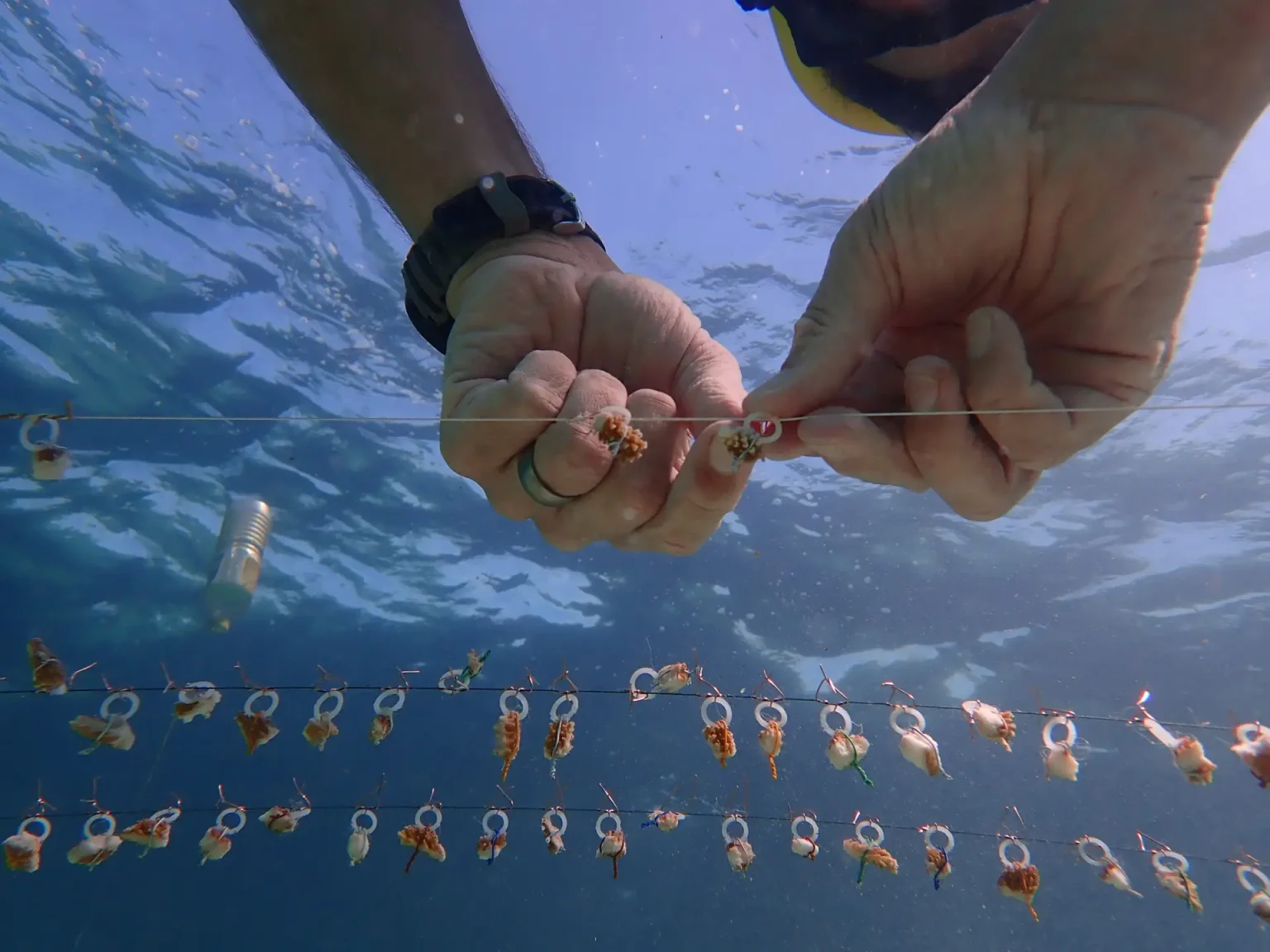
EbA Facility grantee Andrew Ross checks the growth of coral fragments in Montego Bay, Jamaica. Photo: Yaderia Davis / Seascape Caribbean
CONFIRMED 2018
CONFIRMED 2019
CONFIRMED 2023
TOTAL PROGRAMME FUNDING
KfW · BMUKN · International Climate Initiative (IKI)
Concerns about an IKI funded project can be raised through the IKI Independent Complaint Mechanism (UBM).
IKI Complaint MechanismProgramme funding by year is reported in euros (EUR). Committed funds are reported in US dollars (USD). Figures are shown in their original currencies and have not been converted.
OUR GRANTEES
These organisations show Ecosystem-based Adaptation in action, building a more resilient Caribbean for people and nature.
GRANTMAKING
We encourage organisations with impactful EbA projects to explore their eligibility. Successful projects show a clear EbA focus and work in, or directly benefit, the marine and coastal zone.
Each call sets out eligible countries, strategic directions, accepted languages, the due date and where to send questions.
Complete the Concept Note template in English, French or Spanish through the Call for Proposals Submission Portal. Seven pages maximum.
Selected Concept Notes are invited to submit Full Proposals in English. Translation support may be available.
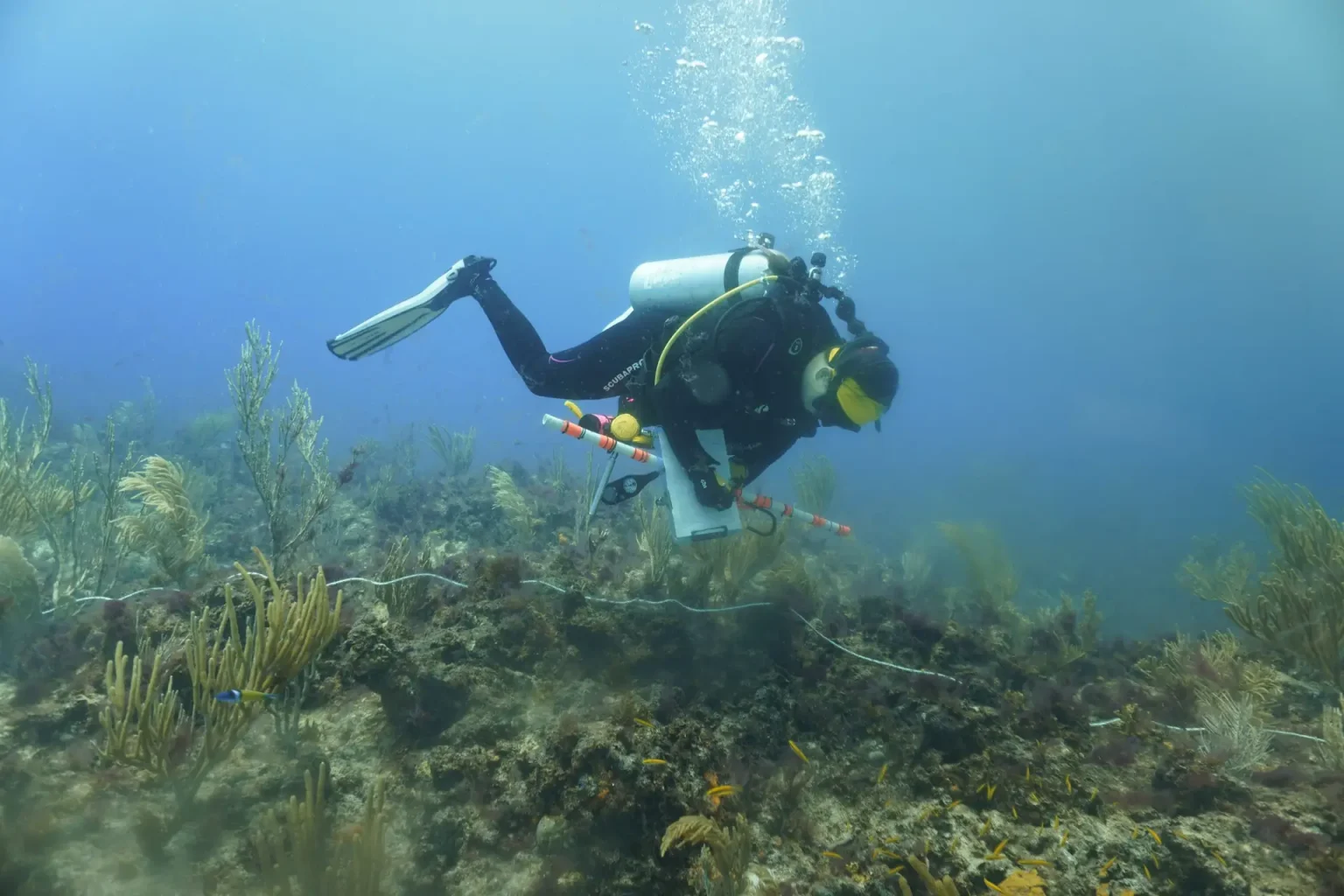
Monitoring a reef for coral disease in Punta Cana, Dominican Republic. Photo: Lizeth Cruz
USD 1M to 2M, with exceptions for larger multi-country or regional projects. For international, regional and national entities that have managed grants of this size in the last three years.
USD 250,000 to 1M, for seascape and site-scale projects that can serve as models for scaling up. Primarily national and local entities with a comparable track record.
Projects may run for up to 36 months. Co-financing should be identified wherever possible; UN agencies and private sector applicants should match the grant request at least 1:1. Successful applicants must open a dedicated bank account for the grant.
Templates and guidance for applicants, plus our most recent Call for Proposals.
GUIDANCE
The results framework every proposal should align with.
ViewJoin the funders and partners helping Caribbean communities adapt to climate change through healthy ecosystems.