
Protecting Vital Ecosystems
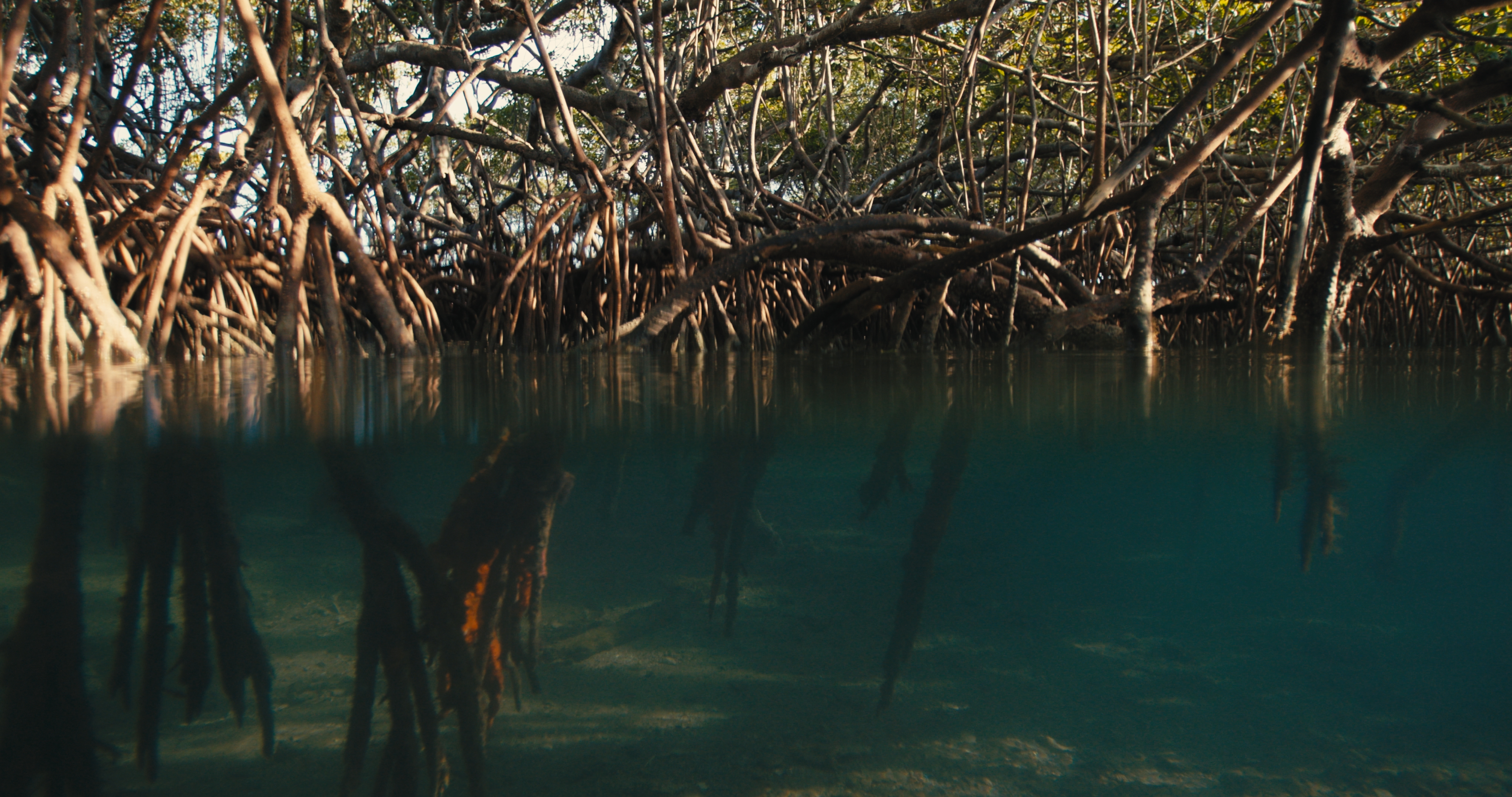
Protecting coral reefs, mangroves and other critical ecosystems that act as natural barriers against storms, floods and coastal erosion.
Hurricanes and storms are becoming more frequent and severe, causing devastating damage to coastal communities and infrastructure.
The ocean’s chemistry is changing, harming marine life like coral reefs, which are crucial for coastal protection and biodiversity.
As sea levels rise, coastal areas face increased flooding and erosion, threatening homes, businesses, and vital ecosystems.
Pollution from waste and unsustainable fishing practices damage delicate marine ecosystems and threaten food security.
Ecosystem-based Adaptation helps communities reduce vulnerability to climate change by integrating biodiversity, ecosystem services, human well-being and sustainable livelihoods into broader adaptation strategies.
A key approach to address climate threats is to implement Ecosystem-based Adaptation actions, which build resilience and reduce the vulnerability of people and economies to climate change. As part of a broader climate change adaptation strategy, EbA provides resilient and cost-effective ways to alleviate climate change impacts by connecting the sustainable use of biodiversity and ecosystem services with community well-being.
Protecting coral reefs, mangroves and other critical ecosystems that act as natural barriers against storms, floods and coastal erosion.
Supporting approaches that safeguard biodiversity, maintain ecosystem services and encourage more sustainable use of natural resources.
Helping communities adapt to changing environmental conditions while building long-term resilience and a more secure future.
The program funders recognize the urgency of climate action and remain committed to supporting innovative solutions. The program has received significant financial backing over the years, demonstrating this dedication.
The EbA Facility is supported by the German Federal Ministry for the Environment, Nature Conservation, Nuclear Safety and Consumer Protection (BMUV) through the International Climate Initiative (IKI) and KfW.
Aimed at supporting effective climate change adaptation measures in the marine and coastal zone of the insular Caribbean, the EbA Facility awards grants to support a wide range of EbA actions in eligible Caribbean countries and territories. These actions include restoration and rehabilitation of ecosystems, reduction of land-based stressors, other measures to reduce pressures on ecosystems, measures to reduce physical damage to ecosystems and hybrid solutions (gray-green infrastructure) relevant to the EbA approach.
The EbA Facility supports proposals that are strategically aligned, collaborative, replicable and connected to practical implementation and policy decision-making.
Clear links to national, regional and international commitments, including the Caribbean Challenge Initiative, multilateral environmental agreements and the UN Sustainable Development Goals.
Development of new and replicable models that can be adapted, scaled and applied across similar Caribbean contexts.
Collaborative initiatives that bring together institutions, communities and technical partners to strengthen implementation and knowledge exchange.
Strong links between on-the-ground interventions and policy decision-making, helping local results inform broader national and regional action.
Proposals that complement existing EbA work and create opportunities for coordination, learning and greater regional impact.
The program has directly supported 34 innovative projects tackling climate challenges across the Caribbean. These grants empower communities to implement effective Ecosystem-based Adaptation (EbA) initiatives, building resilience for people and ecosystems.
During the first call for proposals, the program funded 11 projects. The second call for proposals resulted in the funding of 8 projects, and the third call for proposals awarded grants to 7 projects. The most recent fourth call for proposals identified 7 proposals for funding, with implementation currently underway in 6 countries.
These inspiring projects showcase the power of Ecosystem-based Adaptation (EbA) in action. Dive deeper and discover how our grantees are creating a more resilient Caribbean:
The Caribbean Biodiversity Fund’s Ecosystem-based Adaptation (EbA) Facility has committed US$40 million to support 34 innovative projects selected through four rounds of competitive calls for proposals.
These calls for proposals targeted projects that demonstrate a clear EbA focus. This means projects must integrate the sustainable use of biodiversity and ecosystem services into a broader climate change adaptation strategy. Ultimately, these projects aim to help communities cope with the negative impacts of climate change.
This intervention category covers a range of management activities that directly protect habitats in order to reduce climate risks. It also covers activities that directly restore or rehabilitate habitats in order to reduce climate risks. Restoration activities could include conventional (well-established) natural habitat restoration approaches, new types of natural habitat restoration approaches, and hybrid solutions that combine build infrastructure with natural habitats. Hybrid solutions, also known as green-gray solutions, often provide cost effective, long-term climate resilience to vulnerable communities and infrastructure. Illustrative activities include but are not limited to:
This intervention category is to be engaged in tandem with the interventions identified in the section above. It covers a range of activities linked to community engagement in reducing climate risks and building adaptive capacities associated with restoration and rehabilitation. Activities could be designed to create greater understanding, capacity and participation among the people most affected by climate change, and that most depend on ecosystem services provided by natural habitats. Illustrative activities include but are not limited to:
Across the above intervention categories, the EbA Facility could support the testing and development of new EbA models that could be scaled up, including new approaches, techniques and technologies. Illustrative examples include but are not limited to:
In alignment with the CBF’s vision of a Caribbean region where both its natural environment and people thrive, the proposed projects should yield significant environmental and social net benefits to the region. Proponents applying to this Call for Proposals should demonstrate that they are able to identify, assess, and manage the environmental, social, and climate change-related risks and impacts of their projects.
Applicants are encouraged to consult the CBF Environmental and Social Policy and Exclusion List to make sure that their Concept Notes are aligned with the CBF’s requirements.
This intervention category covers a range of management activities that directly protect habitats in order to reduce climate risks. It also covers activities that directly restore or rehabilitate habitats in order to reduce climate risks. Restoration activities could include conventional (well-established) natural habitat restoration approaches, new types of natural habitat restoration approaches, and hybrid solutions that combine build infrastructure with natural habitats. Hybrid solutions, also known as green-gray solutions, often provide cost effective, long-term climate resilience to vulnerable communities and infrastructure. Illustrative activities include but are not limited to:
Large grants would be in the range of USD 1M to USD 2M, with some exceptions for larger grants involving multi-country/regional projects. These grants could cover projects that target broad geographic scales and larger-scale impacts (e.g. regional, national and seascape-scale projects). Grantees could be international, regional and national-level entities (government and non-governmental) with a track record of managing grants of this size in the last three years.
Whenever possible, co-financing should be identified. United National agencies and private sector applicants are expected to commit at least matching finance in support of the grant request (50% CBF; 50% cofinance).
Applicants are asked to note that a separate bank account dedicated to the EbA Facility grant must be opened by organizations in the event that an award is approved on the basis of successful proposals.
The projects may be implemented in a maximum period of 36 months.
If you are applying for an EbA Facility grant, you will submit your concept note via the Call for Proposal Submission Portal.
Applicant organizations must complete the Concept Note Template (English, French, Spanish). It is recommended that the Concept Note template is followed and completed fully. The Concept Note template has instructions on what is expected from the projects and indicates important references, such as the EbA Facility Logical Framework and CBF Environmental and Social Policy and Exclusion List. Concept Notes will be accepted in English, Spanish and French.
Full proposals after the concept selection phase will only be accepted in English. Funding to cover the cost of translation to English can be made available to applicants selected to submit full proposals as part of a project preparation grant mentioned.
Applicants must ensure that the Concept Note does not exceed seven (7) pages. No word limit is specified but Times New Roman font size 12 must be used throughout the submission and document margins must be maintained.
For a comprehensive understanding of this program, we invite you to explore the following resources:
This website uses cookies to ensure proper functionality and to collect anonymous statistics that help us improve our services. We do not use cookies for advertising or marketing purposes. By continuing to use this website, you consent to the use of cookies as described in our Cookie Policy.