Estado
En curso
The Reef Resilience and Risk Financing Mechanisms (R3FM) project objective is to help Caribbean countries protect and restore coral reefs after hurricanes by linking local response capacity to fast, pre-arranged financing. The project builds the people, plans and funding needed to act in the critical days after a storm, when damaged corals can still be saved.
Valued at USD 1.7 million, the R3FM project is led by the Caribbean Biodiversity Fund (CBF) and runs from September 2025 to October 2027. It is implemented with National Conservation Trust Funds in four pilot countries: the Dominican Republic, Jamaica, Saint Lucia, and St. Vincent and the Grenadines.
In collaboration with Willis (WTW), the R3FM project has designed a first-of-its-kind parametric insurance policy for Caribbean coral reefs. The policy covers about 1,800 km² of reefs across the four countries for the 2026–2027 Atlantic hurricane season. When a hurricane meets pre-agreed thresholds near a covered reef, funds are released quickly to trained local responders, with no damage assessment required.
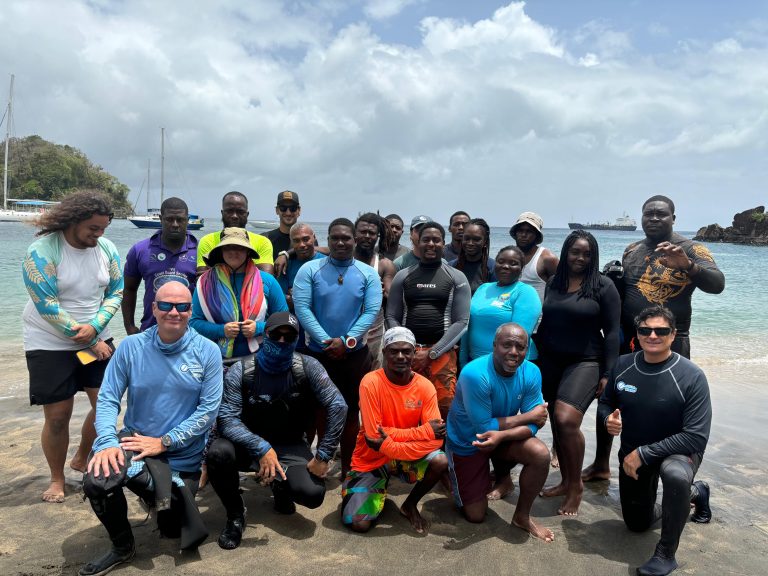
R3FM also creates paid opportunities for coastal communities. Fishers, divers, dive operators and other local residents are trained as reef responders, so they can earn income helping to clear debris and stabilise corals after storms, when livelihoods are often disrupted.
Coral reefs are the Caribbean’s natural infrastructure. They reduce wave energy by an average of 97%, limit coastal erosion, and sustain the fisheries and tourism that support communities across the region. Caribbean reefs contribute an estimated USD 6.2 billion a year to tourism and fishing. In Jamaica, Saint Lucia, and St. Vincent and the Grenadines, nearly everyone lives within 10km of the coast.
Yet these reefs are under growing pressure.Since 1980, hard coral cover across the Caribbean has fallen by 48%, driven largely by heat stress, overfishing and disease. Hurricanes add to the damage as a reef’s live coral cover drops by about 17% in the year after a hurricane strikes. When reefs are damaged, coastal communities face greater flood risk and economic losses for years.
After a hurricane, many broken corals can be saved, but only if action is taken within days. Too often, that window closes before help arrives. Response plans are not in place, trained teams are not ready, and funding takes too long to secure. Conservation is largely funded through time-limited project grants, and emergency fundraising after a storm is slow and unpredictable.
R3FM addresses this gap by building on the experience of the Mesoamerican Reef Fund (MAR Fund), which has pioneered post-hurricane reef response and reef insurance in the Mesoamerican Reef region for more than five years. R3FM adapts these lessons for Caribbean island states, where each country has its own governance structure and network of reef stakeholders.
R3FM puts people, plans and funding in place before hurricane season, so response can begin as soon as conditions allow. The project works through four connected components:
How the reef insurance works
The policy uses a “Dynamic Cat-in-Circle” structure, the first of its kind for coral reefs. Instead of a fixed zone, the covered area adjusts to each storm’s size, which greatly reduces “near misses” where a damaging storm narrowly avoids triggering a payout.
 Presione soltar
Kingston, Jamaica — 17 July 2026 — The Caribbean Biodiversity Fund (CBF), through its Reef Resilience and Risk Financing Mechanism (R3FM), has...
Leer más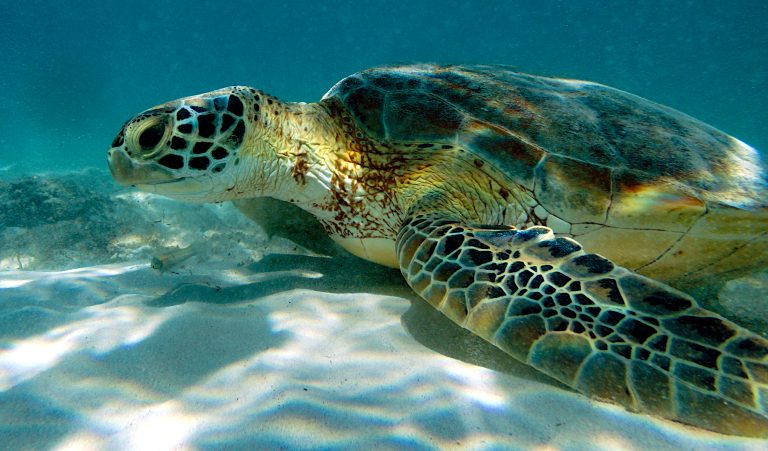 Presione soltar
Caribbean island communities to benefit from pay-outs of up to US$150,000 per eventto finance emergency reef response after hurricanes strike. GLOBAL, August...
Leer más Gobierno alemán a través del Banco Alemán de Desarrollo (KfW)
 Asuntos Globales de Canadá
 Agencia Francesa de Desarrollo (AFD)
 Fonds français pour l’environnement mondial (FFEM)
 Fondo MARENA
 Fondo Fiduciario Nacional de Conservación de Jamaica
 Fondo Nacional de Conservación de Santa Lucía
 Fondo de Conservación de San Vicente y las Granadinas
 Fondo para el Medio Ambiente Mundial