


Ces deux dernières années, le changement climatique a eu des effets dévastateurs sur les récifs coralliens du monde entier. Dans les Caraïbes, et plus particulièrement aux Îles du Vent, la température de la mer a atteint des niveaux records, dépassant les 31 °C. Le niveau de stress thermique, mesuré en degrés-semaines de chauffage, a atteint 25, ce qui, selon la NOAA, correspond à un “ risque de mortalité quasi totale ” dû au blanchissement des coraux.
Our restoration teams in St Lucia and St Vincent and Grenadines have been doing extensive surveys looking for elkhorn and staghorn survivors – and it’s not looking good. The sea has been too rough to survey the windward coasts, so we hope we will find some there when it is calmer. In our nursery in Saint Lucia, we have some surviving elkhorn and staghorn genotypes because we moved them into deeper water, but almost all our outplants and source colonies have died. To make matters worse, last year’s coral bleaching comes on the heels of the terrible SCTLD coral disease, Category 5 Hurricane Beryl, and the severe bleaching of 2023.
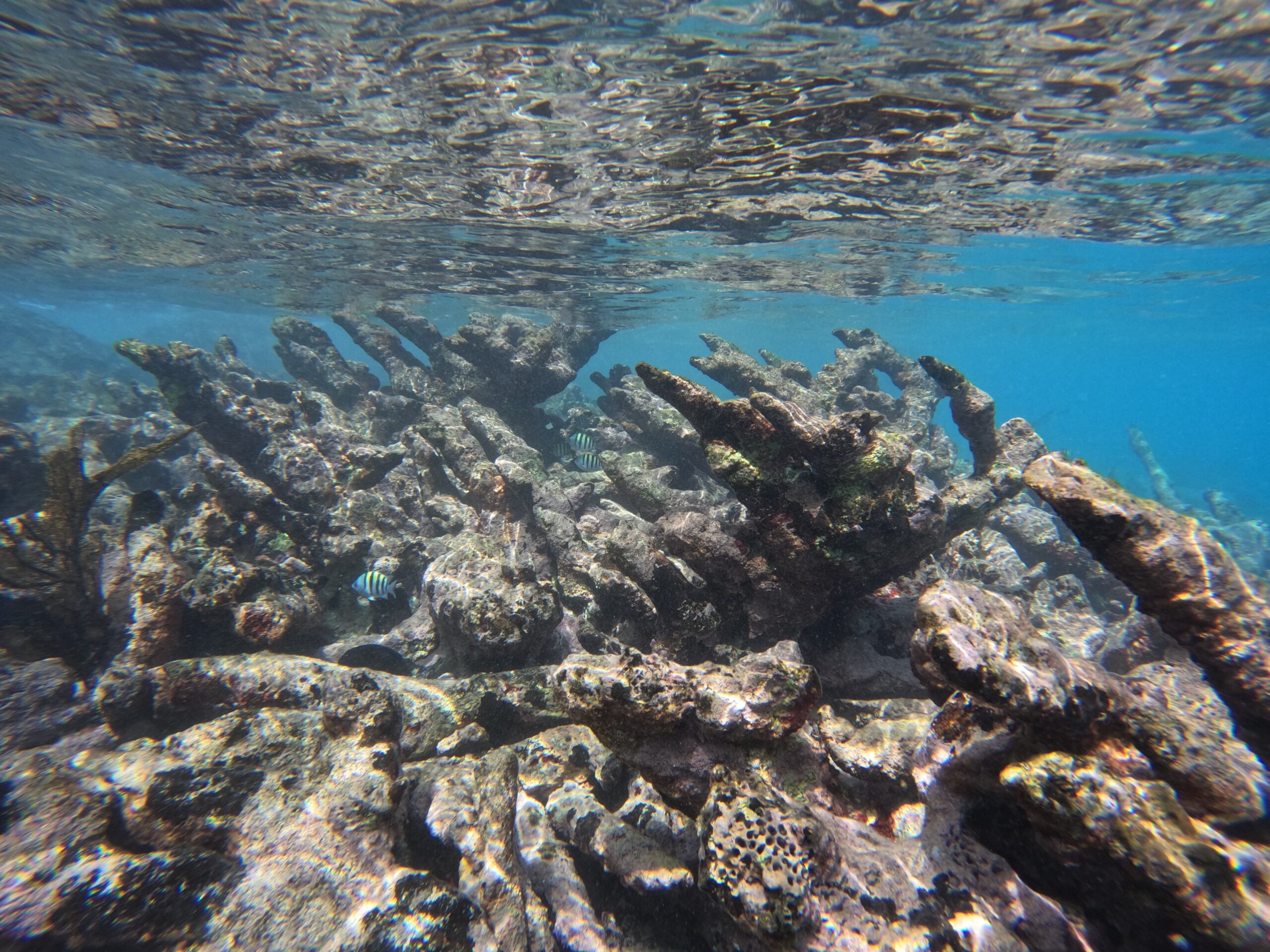
Marine scientists across the region are monitoring the situation with shock and almost despair. Some are asking whether coral reefs have passed a tipping point where recovery will not be possible. A regional group of marine biologists supported by the Caribbean Biodiversity Fund have recently set up the Caribbean Coral Health Forum to discuss what the next steps should be to conserve and restore coral reefs. It is clear that we need to re-evaluate our restoration strategy and consider all options.
The main aim of coral restoration is to assist corals to adapt to a warmer world. To do this, we need to speed up natural selection by helping the more resilient corals grow and reproduce with a high level of genetic diversity. The more genetically diverse a population is, the more resilient it is. A simple rule is to have fragments from at least 35 individual corals taken from different locations to ensure that over 95% of the genetic diversity (allelic diversity) of the population is captured. The problem facing coral restoration programmes in the Eastern Caribbean is that it is becoming increasingly difficult to find that many surviving colonies within one country.
More importantly we now need to do what many scientists are recommending and start moving corals from hot areas to cooler areas – it is called assisted migration. The Meso-American Reef Complex has shallow waters that are on average 1°C degree warmer than the Eastern Caribbean during the summer months. The corals there have adapted to warmer conditions and some have even survived 34C!
Pour la survie des récifs coralliens des Caraïbes, il est désormais crucial que scientifiques et décideurs politiques collaborent afin de faciliter le transfert de coraux par-delà les frontières nationales et de contribuer à la création de pépinières régionales de gènes coralliens dans chaque pays. Les scientifiques doivent élaborer des protocoles pour minimiser les risques de transmission de maladies. Il est temps d'innover – et le temps presse.
Les opinions exprimées dans ces articles sont données à titre informatif seulement et ne représentent pas la position officielle du Fonds pour la biodiversité des Caraïbes ni de ses partenaires.