


En los últimos dos años, el cambio climático ha tenido efectos devastadores en los arrecifes de coral de todo el mundo. En el Caribe, en particular en las Islas de Barlovento, las temperaturas del mar alcanzaron las más altas jamás registradas, superando los 31 °C. El nivel de estrés térmico, medido en semanas de calentamiento por grados, alcanzó los 25, lo que, según la NOAA, se traduce en un riesgo de mortalidad casi total por blanqueamiento de los corales.
Our restoration teams in St Lucia and St Vincent and Grenadines have been doing extensive surveys looking for elkhorn and staghorn survivors – and it’s not looking good. The sea has been too rough to survey the windward coasts, so we hope we will find some there when it is calmer. In our nursery in Saint Lucia, we have some surviving elkhorn and staghorn genotypes because we moved them into deeper water, but almost all our outplants and source colonies have died. To make matters worse, last year’s coral bleaching comes on the heels of the terrible SCTLD coral disease, Category 5 Hurricane Beryl, and the severe bleaching of 2023.
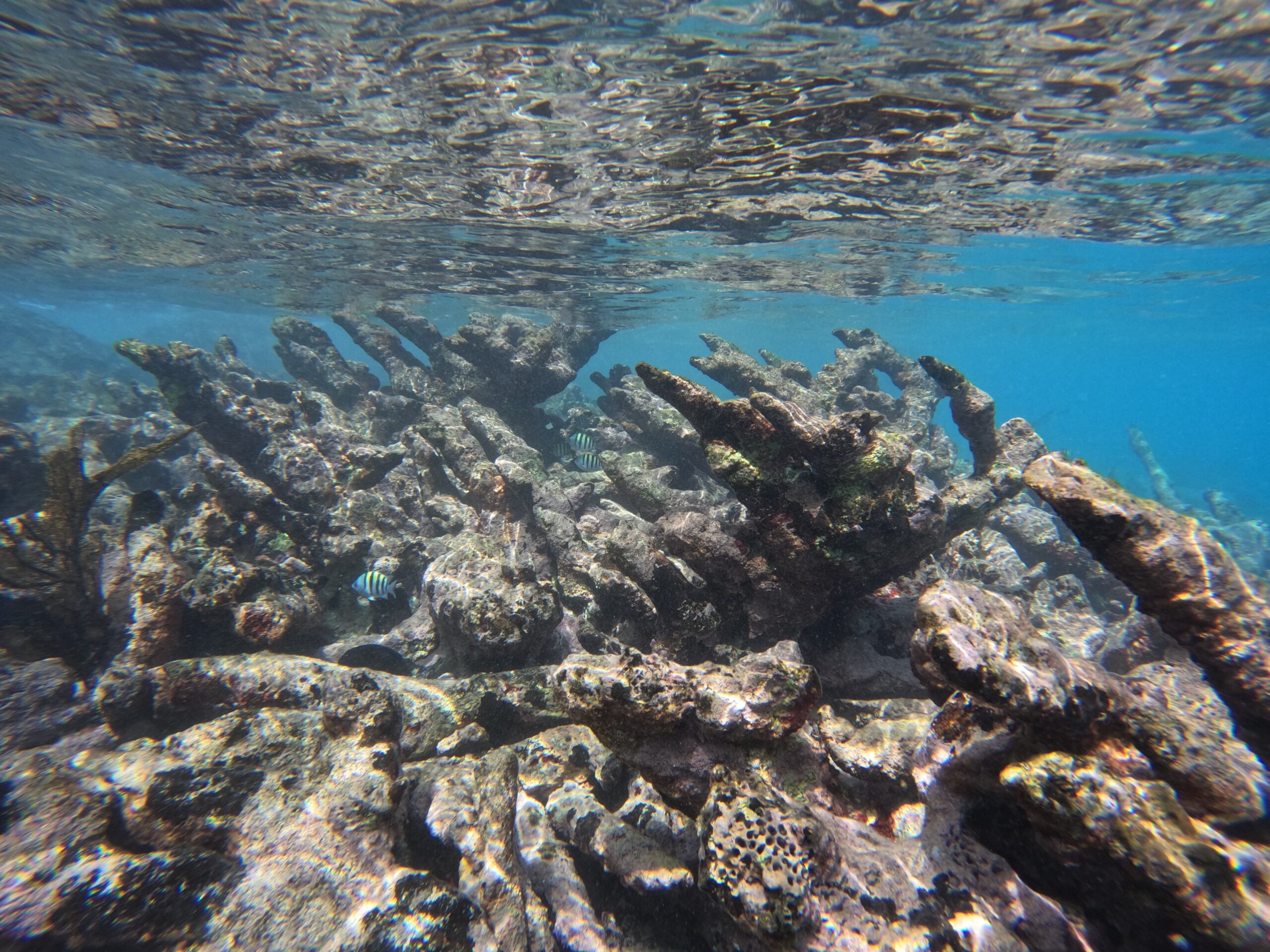
Marine scientists across the region are monitoring the situation with shock and almost despair. Some are asking whether coral reefs have passed a tipping point where recovery will not be possible. A regional group of marine biologists supported by the Caribbean Biodiversity Fund have recently set up the Caribbean Coral Health Forum to discuss what the next steps should be to conserve and restore coral reefs. It is clear that we need to re-evaluate our restoration strategy and consider all options.
The main aim of coral restoration is to assist corals to adapt to a warmer world. To do this, we need to speed up natural selection by helping the more resilient corals grow and reproduce with a high level of genetic diversity. The more genetically diverse a population is, the more resilient it is. A simple rule is to have fragments from at least 35 individual corals taken from different locations to ensure that over 95% of the genetic diversity (allelic diversity) of the population is captured. The problem facing coral restoration programmes in the Eastern Caribbean is that it is becoming increasingly difficult to find that many surviving colonies within one country.
More importantly we now need to do what many scientists are recommending and start moving corals from hot areas to cooler areas – it is called assisted migration. The Meso-American Reef Complex has shallow waters that are on average 1°C degree warmer than the Eastern Caribbean during the summer months. The corals there have adapted to warmer conditions and some have even survived 34C!
Para la supervivencia de los arrecifes de coral del Caribe, es crucial que científicos y legisladores colaboren para facilitar el movimiento de corales a través de las fronteras nacionales y así ayudar a establecer viveros regionales de bancos genéticos de coral en cada país. Los científicos deben desarrollar protocolos para minimizar los riesgos de transmisión de enfermedades. Ha llegado el momento de pensar con originalidad, y no tenemos mucho tiempo.
Las opiniones expresadas en estos artículos son sólo para fines informativos y no representan la posición oficial del Fondo de Biodiversidad del Caribe o sus socios.