


Contributor: Malika Muqtadir, Communications Intern, Caribbean Biodiversity Fund
PORTMORE, St. Catherine, August 28, 2026: At I-SEEED Youths Ltd, agriculture is being used to grow more than food. Through its developing Farm-to-Table Hub, the organization is creating a space where sustainable farming can provide skills, livelihoods and new opportunities for youth, women and local farmers, all under one umbrella.
The Caribbean Biodiversity Fund (CBF) communications team, Communications Officer Renée Smith and interns Kemal Forde and Malika Muqtadir, visited the project to capture the progress unfolding on the farm and hear from the people at the heart of its impact.
Founded by Tracey-Ann Harriage-Edwards, a domestic violence ‘sur-thriver’, I-SEEED Youths is bringing its vision to life with conservation financing from the Caribbean Biodiversity Fund’s Caribbean Organizations for a Resilient Environment (CORE) project through the National Conservation Trust Fund of Jamaica (NCTFJ). The CORE project is implemented by the CBF in partnership with Global Affairs Canada (GAC) and with support from the KfW Development Bank on behalf of the German Federal Ministry for Economic Cooperation and Development (BMZ).
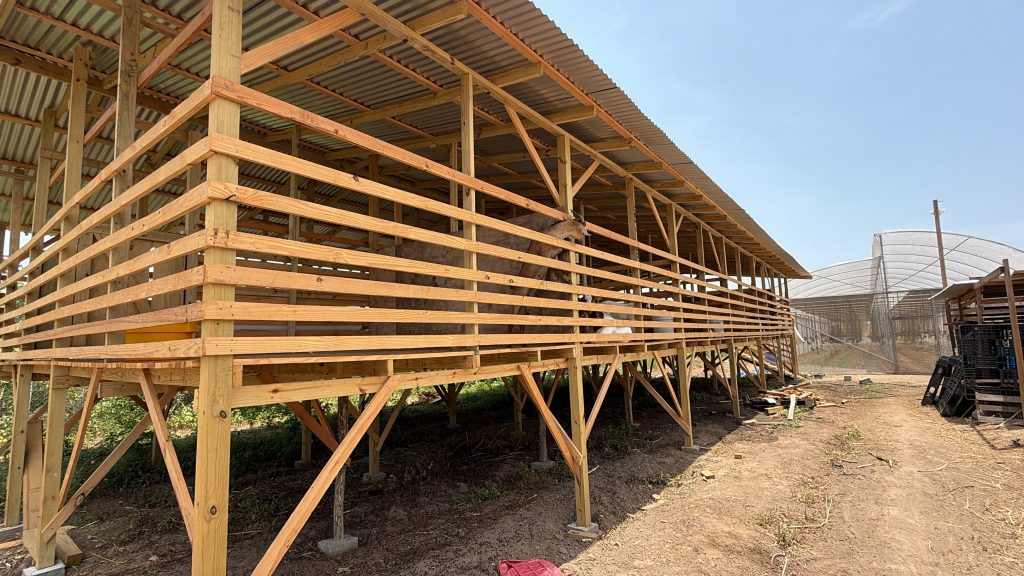
I-SEEED Youths’ new climate-resilient goat shed. Photo: Malika Muqtadir
Behind that support is an ongoing process of ensuring that the investment continues to deliver what it set out to achieve. For NCTFJ Field Officer Ramone Cohen, being on the ground is part of that process. “At NCTFJ, we assess how the project is progressing for reporting and transparency to maintain a good funding relationship.” But the value of the investment can also be seen in what is beginning to emerge around it. Cohen sees the initiative as one that “provides new avenues for crop suppliers,” while creating something equally important:
“A safe space for Jamaicans.”
Growing through drought
The I-SEEED Youths journey has not been without challenges, however. The greenhouse was one of the first pieces of the vision to take shape and once had an abundance of seedlings. Harriage-Edwards remembers what it was like to see that progress disappear earlier this year due to the ongoing drought.
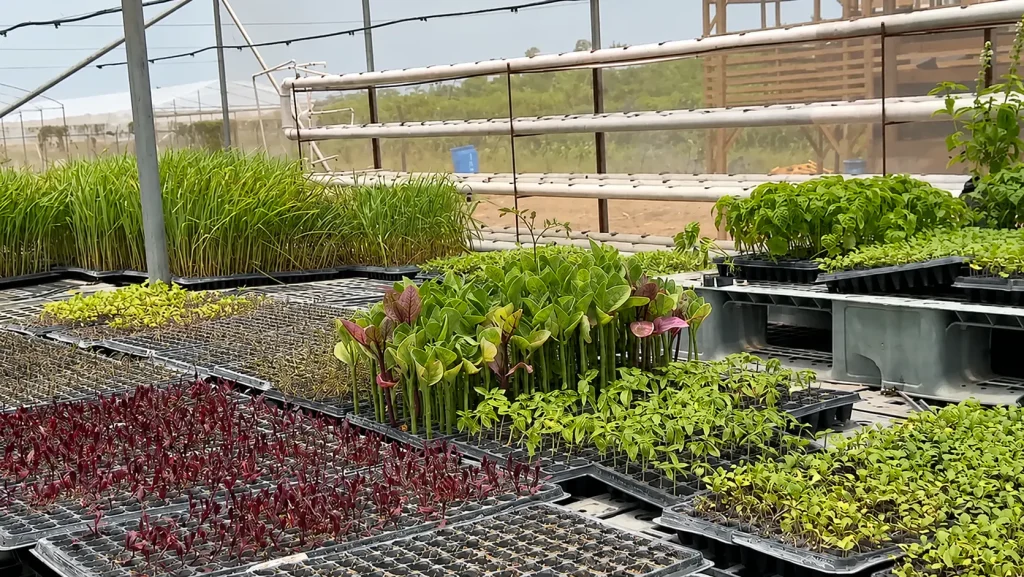
The I-SEEED Youths greenhouse. Photo: Renée Smith
Today, cultivation is underway on one acre of land with water-conscious practices including drip irrigation. As the plants grow, so too does the infrastructure being built around them. A climate-resilient goat shed has been constructed with plans for goat milk production and future value-added products, while an outdoor eco-kitchen and dining space is being built nearby.
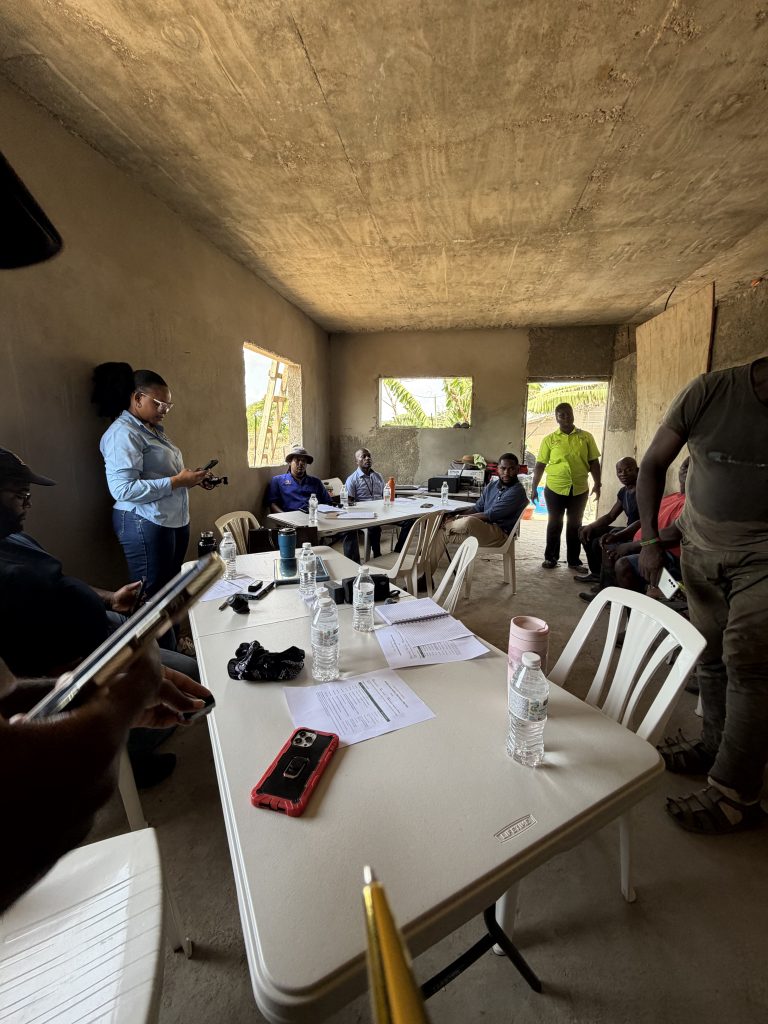
The Farm-to-Table area, where discussions will be held with farmers, investors and government representatives. Photo: Malika Muqtadir
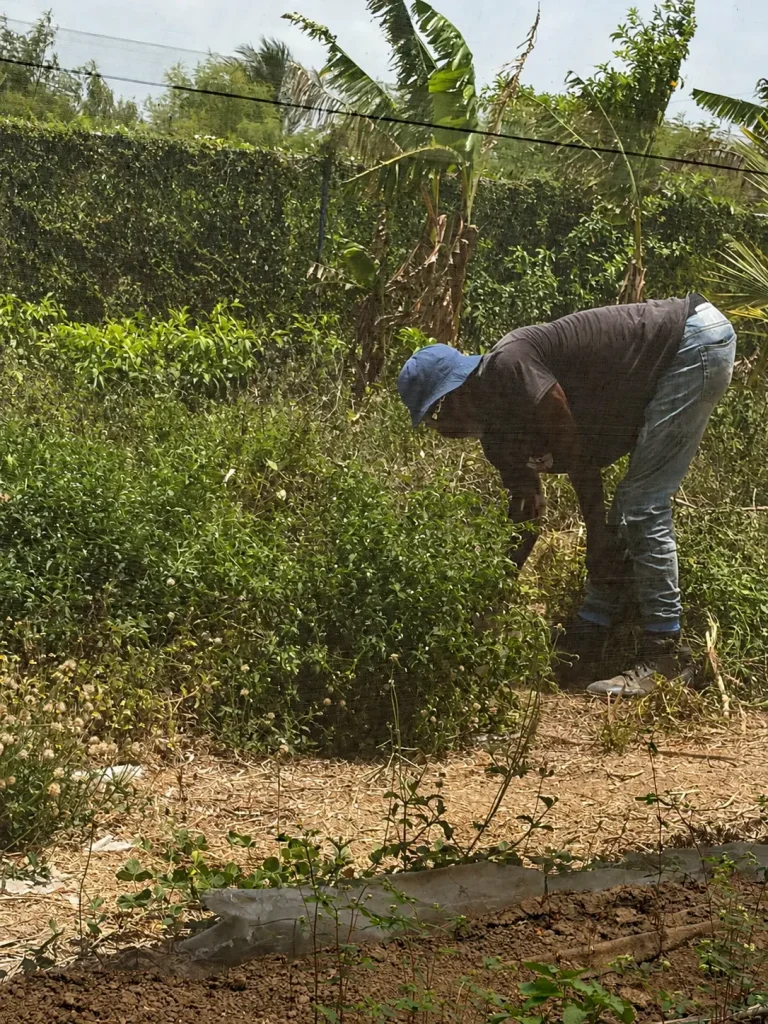
A farmer at work in the field at I-SEEED Youths. Photo: Malika Muqtadir
More than a farm
Beyond farming, an advocacy group is undergoing registration to strengthen community participation while supporting training and employment. But perhaps the evidence of what I-SEEED Youths can mean for the people and community it serves is already working among the crops.
Marlon White was once considered an at-risk youth and has since spent the past two years developing his farming skills at the farm. For him, I-SEEED Youths is more than a workplace, as it has provided a healthy environment focused on growth and productivity.
“I grew up in a violent community. I was once in a gang and was even shot twice, but farming takes care and love, and that allows me to take care of my family.” Marlon White
Today, Marlon considers himself a testimony to what I-SEEED Youths can offer and encourages other young people to join the organization that showed him a more wholesome direction.
As the I-SEEED Youths Farm-to-Table Hub moves closer to completion, the focus now turns to bringing its different elements together into a space that can serve both people and purpose.