


Contributor: Malika Muqtadir, Communications Intern, Caribbean Biodiversity Fund
FALMOUTH, Trelawny: Across the Winns Morass mangrove, more than 30 young saplings are beginning to take root under a rehabilitation project aimed at protecting and restoring the ecologically important wetland. Funded by the Caribbean Biodiversity Fund (CBF) and implemented by the National Environment and Planning Agency (NEPA), the project seeks to strengthen the health and resilience of the coastal ecosystem.
The CBF communications team, Renée Smith, Kemal Forde and Malika Muqtadir, visited the wetland to document its progress on the ground.
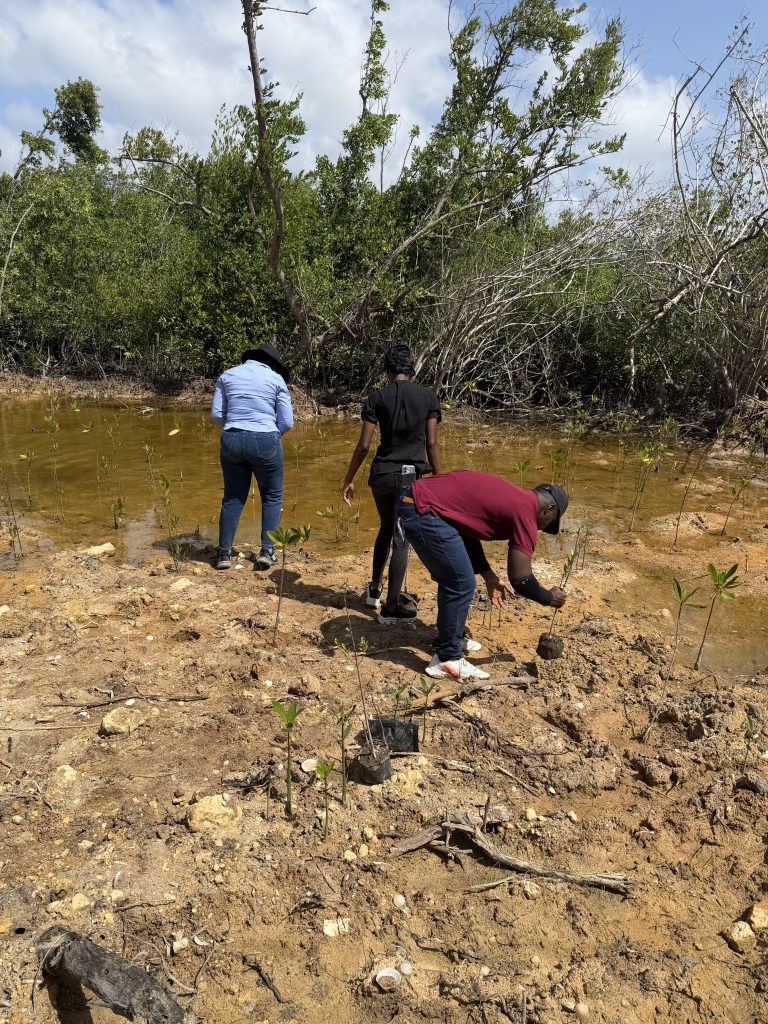
The CBF communications team planting a sapling in the Winns Morass mangrove.
This restoration effort gained early momentum in June 2026, with planting activities beginning on World Oceans Day, marking a new phase of the project. NCTFJ, NEPA, the UWI Discovery Bay Marine Laboratory, Excelerate Energy, and community and school groups came together to plant over 70 saplings. Two further groups of mangrove saplings were introduced in July in collaboration with the UWI Discovery Bay Marine Laboratory, and three more were planted by the CBF team during the site visit in August, adding to the young mangroves now populating the wetland. Standing between approximately 0.5 and 1.5 metres tall, the saplings offer early signs of recovery in an area affected by restricted water circulation, household waste and unauthorised construction.
The saplings may be small, but their survival is important to the wetland’s future. As the mangroves mature, their roots can stabilise the coastline, reduce erosion and create habitats for other species, while strengthening the wetland’s capacity to store carbon and provide protection against storm surges and sea-level rise.
The rehabilitation project is working to restore the ecological health of Winns Morass and safeguard its place within Jamaica’s wider coastal environment, with funding from the CBF through its Caribbean Organizations for a Resilient Environment (CORE) project. Winns Morass is also ecologically connected to the internationally recognised bioluminescent Oyster Bay, commonly known as Glistening Waters. What happens within the wetland therefore influences more than the immediate restoration area; it contributes to the protection of a wider ecosystem known for its tourism value.
A long-term recovery
For Chanel Raynor, Coordinator within NEPA’s Ecosystems Management Branch, the young mangroves are part of an impact that must be nurtured and measured over time.
“Restoring the mangrove will be a long-term process; mangroves can take approximately 10 years to reach full maturity.” Chanel Raynor, NEPA
That long timeline means success cannot be judged only by the number of saplings planted. It will also depend on the extent of natural recruitment, how well the saplings grow and whether the surrounding conditions continue to support their development. NEPA interns conducted a measurement of the saplings and will return at established intervals to monitor their survival, height, lateral spread and overall condition.
The return of water to previously disconnected sections of the wetland is another early indication of change. Up to nine channels have been constructed to improve water movement throughout the wetland. This improved circulation can create better conditions for mangroves to grow while supporting water quality and wider ecological functions. As more water moves through the area and more saplings are planted, the individual project activities begin working together to rebuild the natural processes that support this ecosystem.
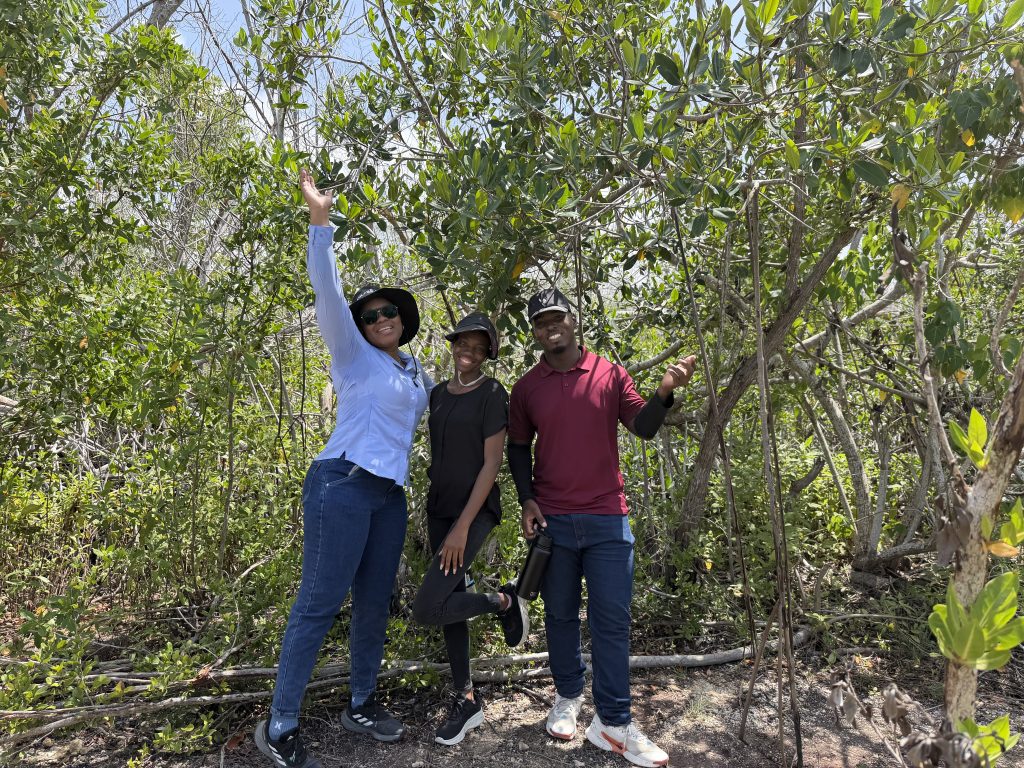
CBF Communications Team: Renée Smith (left), Malika Muqtadir (middle) and Kemal Forde.
Pressures on the wetland
However, the early progress at Winns Morass remains vulnerable. Household waste disposal and unauthorised construction continue to threaten the wetland. Raynor reported that approximately 10 unauthorised structures are present in the area and over 30 truckloads of waste material have been removed from the forest, demonstrating the scale of the human pressure the project must address alongside ecological restoration. Planned fencing is expected to restrict unauthorised vehicular access and discourage further construction. Yet fencing alone cannot guarantee the wetland’s future.
“This physical protection, supported by continued monitoring by the community and public awareness, will be important to safeguarding the restoration work.” Chanel Raynor, NEPA
Through initiatives such as the Mangrove Plus Project, implemented locally by the Forestry Department, efforts are being undertaken to support the protection and restoration of Jamaica’s mangrove ecosystems. The site will also be declared under the Forest Act, providing an additional framework for its management and protection.
This designation will strengthen the management of the area and support measures to conserve its ecological functions, including coastal protection, biodiversity and climate resilience. Together with ongoing restoration efforts, these actions demonstrate how effective management and on-the-ground conservation can support the long-term protection of Jamaica’s coastal and wetland ecosystems.
The transformation of Winns Morass will not be immediate or dramatic. It will be visible in smaller changes, and each change brings the wetland closer to becoming a healthier and more resilient ecosystem.
If the young mangroves continue to grow and the restored areas remain protected, the impact of today’s work could extend well beyond Winns Morass, strengthening Jamaica’s coastline and protecting a connected ecosystem for years to come.