Advancing sustainable finance for coastal and marine conservation
The Caribbean Biodiversity Fund (CBF) continues to play an important role in advancing sustainable financing for biodiversity conservation across the region. Established in 2012 following a direct call from Caribbean governments to support the 20×20 conservation goals, the CBF has mobilized and delivered over USD 35 million in financial and technical support to environmental initiatives in 16 countries throughout the Caribbean.
These investments have strengthened protected area management, enhanced institutional capacity, and expanded innovative conservation finance approaches that are increasingly focused on the region’s vast coastal and marine ecosystems.
The financing gap remains significant
Despite progress, the financing challenge remains substantial. Recent CBF analysis indicates that an estimated USD 576 million is required annually for marine protected area management alone to meet 2030 conservation targets in the Caribbean. Globally, the biodiversity financing gap is estimated between USD 600 and USD 800 billion per year.
In the Caribbean, government spending on protected areas averages approximately one percent of national budgets, at roughly USD 1.18 per hectare. This underscores the urgent need for innovative financing mechanisms and increased private sector engagement.
Caribbean BluEFin: a driver of Blue Economy transformation
It is within this context that the Caribbean Blue Finance (Caribbean BluEFin) Project has emerged as a key driver of regional Blue Economy transformation. The project is executed by the CBF with financial support from the Global Environment Facility (GEF) and implemented through UNEP.
Its objective is to create and strengthen nature-based Blue Economy opportunities across the Caribbean by deploying innovative financing mechanisms for the conservation of coastal and marine ecosystems. By piloting tools such as blue carbon markets, biodiversity finance instruments, and sustainable tourism linked revenue streams, Caribbean BluEFin aims to generate economic returns that are not dependent on limited public budgets, while simultaneously delivering climate, biodiversity, and community benefits.
Linking science, policy, and finance through blue carbon
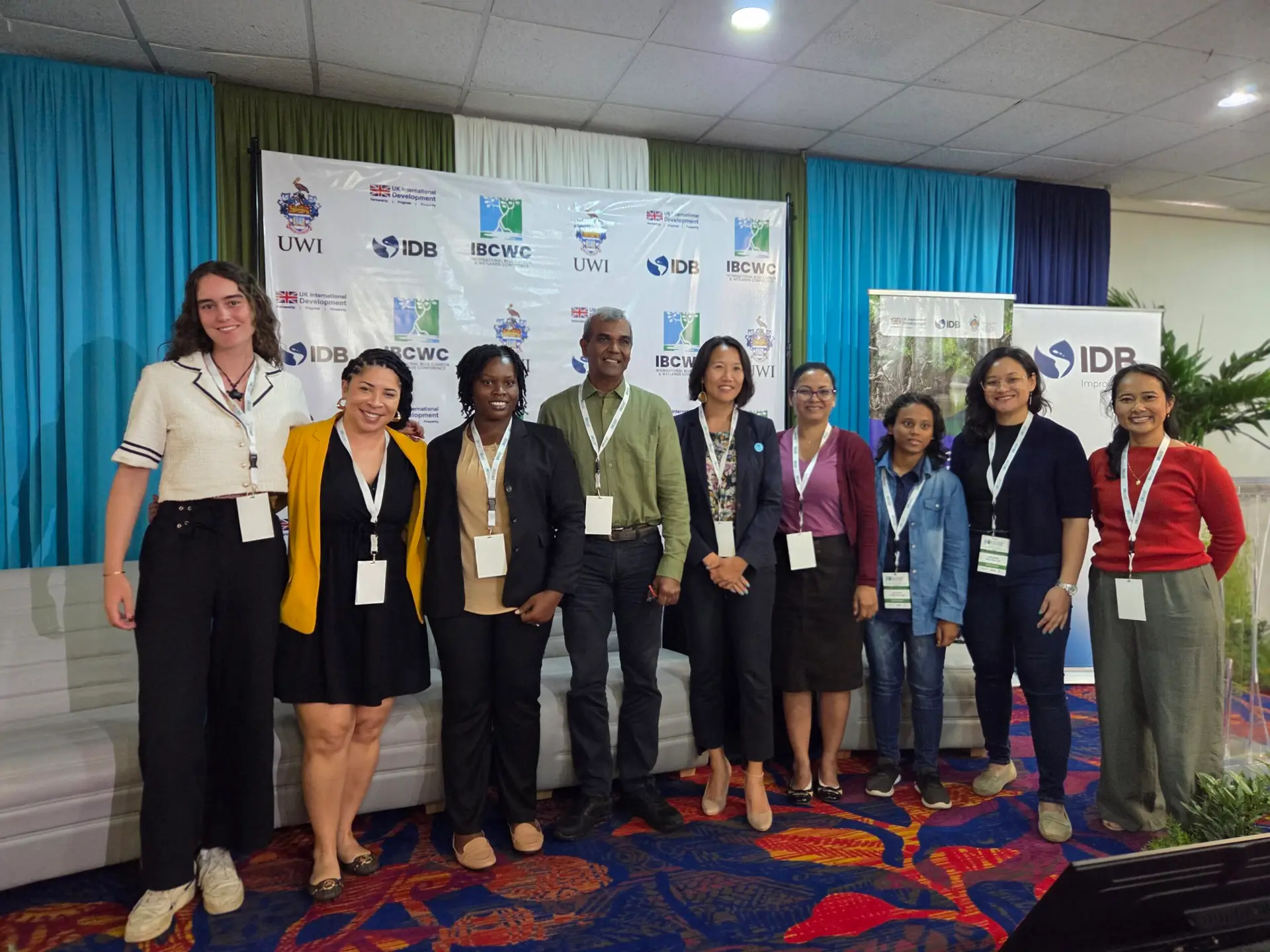
These ambitions align closely with discussions at the recent International Blue Carbon and Wetlands Conference, where Conservation Finance Program Manager Tanja Lieuw represented the CBF. The conference convened scientists, policymakers, conservation practitioners, local communities, and climate financiers from across Latin America and the Caribbean to share research and policy solutions for the protection and restoration of blue carbon ecosystems.
The convergence was clear. Technical advancements in carbon measurement, reporting, and verification (MRV) are rapidly improving the feasibility of blue carbon markets. Case studies from countries including Colombia, Suriname, Trinidad and Tobago, Panama, and the United States demonstrated how mangroves and seagrasses can generate high integrity carbon credits when supported by sound science and strong policy frameworks.
Community engagement and benefit sharing
Equally important was the conference emphasis on community engagement and benefit sharing. Research highlighted that while substantial climate finance flows to Small Island Developing States (SIDS), only around 10 percent directly reaches local communities.
Experience across the region continues to show that early involvement of communities, women as economic actors, and local cultural connections are critical to ensuring sustainability and long term ownership of Blue Economy initiatives.
What comes next
These lessons are informing the evolution of CBF’s broader Blue Economy pillars. Recognizing that finance must be paired with strong institutions, data systems, and inclusive governance, the CBF will work closely with partners such as the Organization of Eastern Caribbean States to strengthen policy environments, advance MRV frameworks, and support national commitments under Nationally Determined Contributions (NDCs) through its Caribbean BluEFin project.