Caribbean Biodiversity Fund’s EbA Facility Wins Prestigious UN SIDS Partnership Award
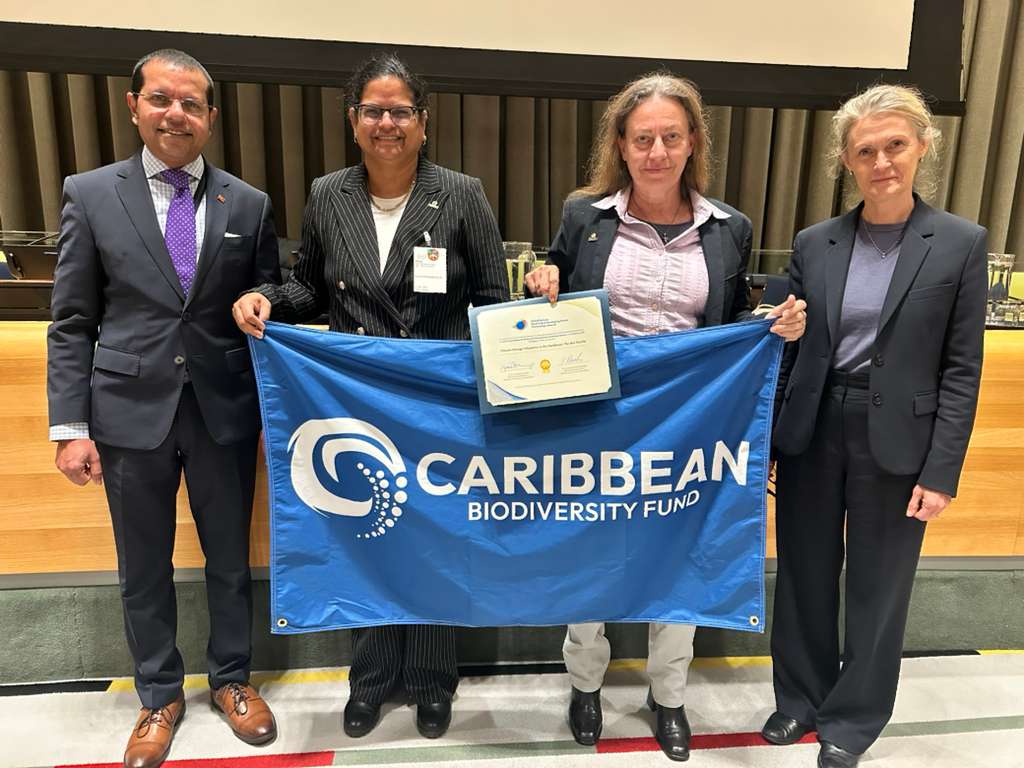
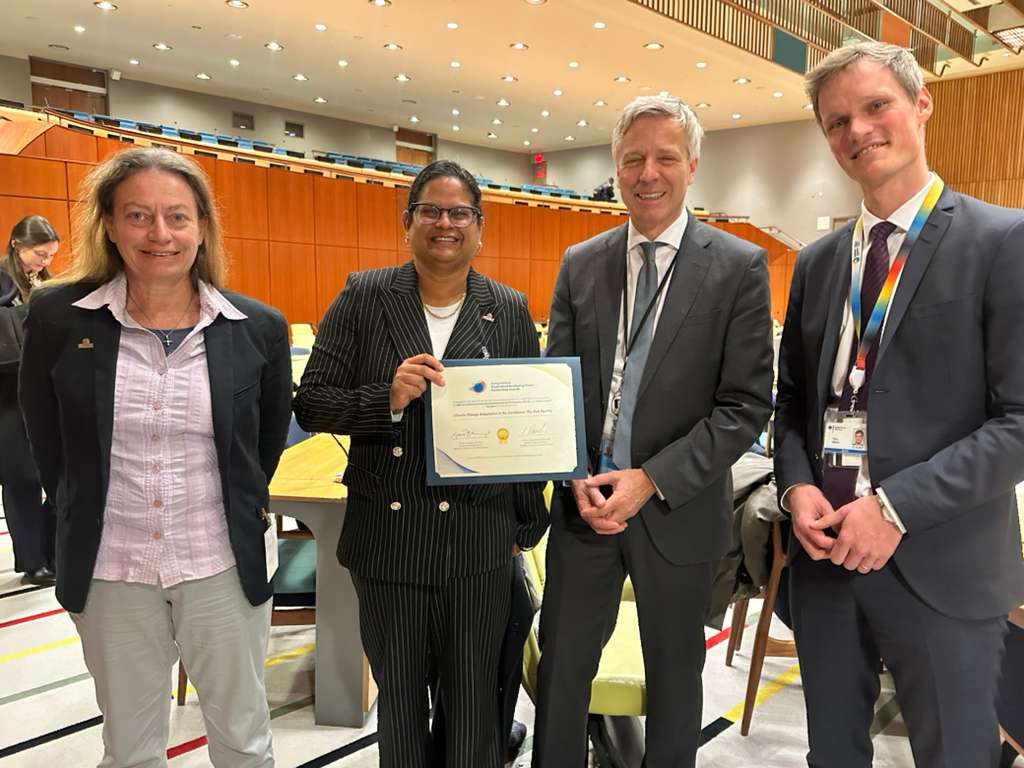
New York, USA — December 2025 — The Caribbean Biodiversity Fund (CBF) is honored to announce that its Ecosystem-based Adaptation (EbA) Facility has been awarded the 2025 United Nations Small Island Developing States (SIDS) Partnership Award in the Environmental category. The Facility is a CBF project supported by the German Federal Ministry for the Environment, Climate Action, Nature Conservation and Nuclear Safety (BMUKN) through the International Climate Initiative (IKI) and KfW Development Bank with a contribution of EUR 55 million. The CBF appreciates not only the German investment, but also their readiness to continue support for EbA approaches in our region.
Presented during the Global Multi-Stakeholder SIDS Partnership Dialogue, this prestigious recognition celebrates partnerships that demonstrate exceptional commitment to sustainable development and the implementation of the Antigua and Barbuda Agenda for SIDS (ABAS). The EbA Facility was selected from partnerships across the globe for its innovative approach to building climate resilience through nature-based solutions.
Building Resilience Through Nature
Since 2016, the EbA Facility has supported communities across the Caribbean in harnessing the power of healthy ecosystems to adapt to climate change. From coral reefs that buffer coastlines against storm surge to mangroves that protect vulnerable communities from erosion, the Facility funds projects that demonstrate nature’s critical role in climate resilience.
The numbers tell a powerful story of impact:
- 34 projects funded across the Caribbean region
- Over USD 45 million committed to ecosystem-based adaptation
- Over 60,000 hectares of coastal and marine ecosystems improved or better protected
- More than 36,000 people directly benefited, including over 16,000 women
- USD 6.4 million in co-financing leveraged from grantees
But beyond the statistics lies a deeper transformation. The EbA Facility has catalyzed innovation in coral restoration, pioneered new approaches to mangrove rehabilitation, and empowered local communities to become stewards of their own climate resilience.
Innovation at the Frontlines
What sets the EbA Facility apart is its commitment to locally-led innovation. Grantees across the region are developing cutting-edge techniques that are reshaping Caribbean conservation:
- In the Dominican Republic, practitioners have perfected an AI-assisted, remotely controllable land-based coral rearing facility—technology now being transferred to partners across the region. Cuban scientists, trained by Dominican peers in sexual coral reproduction techniques, developed their innovation further by creating a national coral spawning calendar for Cuba.
- In Jamaica, conservationists are pursuing economical “silvicultural” approaches to asexual coral mass propagation. Across the Eastern Caribbean, researchers are pioneering “Assisted Gene Flow” models—mechanisms for exchanging coral genetic material to prevent local extinction and enhance diversity.
- In Saint Lucia, what began as community resistance to vetiver grass planting along the Canaries River transformed into enthusiastic adoption. Through patient dialogue and demonstration, skeptical neighbors became advocates when they witnessed stabilized riverbanks without the feared venomous snakes. The innovation scaled beyond the project when the national water company adopted vetiver systems nationwide at flood-prone infrastructure sites.
A Partnership Model That Works
The judging panel recognized the EbA Facility’s governance structure, which ensures both scientific rigor and community ownership. An expert committee appointed by the CBF Board of Directors provides technical guidance, leads grant selection, and evaluates project progress. Meanwhile, implementers on the ground set their own priorities based on site-specific needs.
“CBF designed the EbA Facility to demonstrate what effective climate adaptation in the Caribbean looks like. It is locally led, scientifically sound, and economically inclusive. This UN recognition validates an approach we’ve long believed in that local island partners, communities themselves hold the solutions to practical climate resilience,” said CBF CEO Karen McDonald Gayle.
The Facility operates through competitive calls for proposals that reward innovation, collaboration, and co-financing. Successful grantees receive not just funding, but ongoing technical support, opportunities for peer exchange, and connections to a growing network of Caribbean practitioners.
Beyond Project Cycles
Impact doesn’t end when projects conclude. The EbA Facility has cultivated lasting networks that continue driving innovation across the region. An EbA Network WhatsApp group connects 40 current and former grantees and partners. The Caribbean Coral Health Forum, with 112 newsletter subscribers and 53 active practitioners, serves as a dedicated platform for exchanging practical information on coral health.
Regular webinars, bilateral exchanges, and field visits ensure that lessons learned in one location can benefit practitioners region-wide. This commitment to knowledge sharing amplifies impact far beyond individual project sites.
Looking Ahead
With projects currently underway through the fourth call for proposals and a fifth round in development, the EbA Facility continues expanding its reach. Projects are scheduled for completion between December 2025 and August 2026, with new initiatives expected to launch in late 2025.
The UN SIDS Partnership Award recognizes not just past achievements, but the Facility’s potential for transformative, replicable change across small island developing states worldwide. As climate impacts intensify, the EbA Facility’s model—combining scientific innovation, community leadership, and strategic investment in nature—offers a proven pathway toward resilience.
“This award belongs to every implementing partner, every community member, every scientist and practitioner who has contributed to this work. Together, we’re proving that investing in nature is investing in our shared future,” said EbA Facility Program Manager Dr Ulrike Krauss.
About the EbA Facility
The Ecosystem-based Adaptation Facility, managed by the Caribbean Biodiversity Fund, awards grants to support climate adaptation measures in the marine and coastal zones of the insular Caribbean. Actions include ecosystem restoration and rehabilitation, reduction of land-based stressors, and hybrid gray-green infrastructure solutions. The Facility is funded through 2030 and operates across eligible Caribbean countries and territories. The EbA Facility is a CBF project supported by the German Federal Ministry for the Environment, Climate Action, Nature Conservation and Nuclear Safety (BMUKN) through the International Climate Initiative (IKI) and KfW Development Bank with a contribution of EUR 55 million.
About the UN SIDS Partnership Award
Established by UN Member States in 2021, the SIDS Partnership Awards recognize the most noteworthy, genuine, and durable partnerships implementing the SIDS Accelerated Modalities of Action. Awards are given in three categories: economic, social, and environmental. Winners are selected based on SMART criteria: SIDS specific, measurable and monitorable, achievable and accountable, resource-based and results-focused, and timeline-bound with transparency as well as innovation potential.
About IKI
The International Climate Initiative (IKI) is a key element of Germany’s climate financing. Since 2008, the German Federal Ministry for the Environment, Climate Action, Nature Conservation and Nuclear Safety (BMUKN) has been funding climate and biodiversity projects in developing and emerging countries, as well as in countries in transition. Based on a funding decision by the German parliament, IKI supports projects that help mitigate greenhouse gas emissions, adapt to climate change impacts, protect biodiversity, and reduce emissions from deforestation and forest degradation.
About KfW Development Bank
KfW Development Bank has been supporting the German Federal Government in achieving its goals in development policy and international development cooperation for more than 60 years. In doing so, KfW promotes sustainable transformation worldwide. On behalf of the German Federal Government, and primarily the Federal Ministry for Economic Cooperation and Development (BMZ) and the German Federal Ministry for the Environment, Climate Action, Nature Conservation and Nuclear Safety (BMUKN), KfW finances projects that mainly involve public sector players in developing countries and emerging economies. KfW is strongly committed to the preservation of biological diversity. It is one of the leading international donors for biodiversity. Currently, KfW provides a total of EUR 4.5 billion for biodiversity protection.