MENUMENU
The Caribbean Organizations for a Resilient Environment (CORE) Project helps Caribbean communities adapt to climate change by strengthening local organizations and empowering women to lead environmental solutions.
CORE focuses on eight Caribbean countries: Belize, Dominica, Grenada, Guyana, Jamaica, Saint Lucia, Saint Vincent and the Grenadines, and Suriname. The project supports Conservation Trust Funds, women’s rights organizations, environmental groups and youth organizations that are working on the frontlines of climate and biodiversity challenges.
Partnership and Funding
CORE is implemented by the Caribbean Biodiversity Fund in partnership with Global Affairs Canada.
Through this partnership, CORE channels resources directly to communities and organizations so they can design and implement inclusive and gender responsive nature based solutions that protect both people and the environment.
Caribbean countries face some of the highest climate risks in the world. They are far more likely to experience natural disasters than many other states and experience estimated annual losses of around USD 3 billion. Tourism and agriculture, which are the backbone of many Caribbean economies, are often the hardest hit.
Climate change is already increasing the frequency and intensity of droughts, floods and hurricanes. These events disrupt livelihoods, damage critical infrastructure and slow economic development across the region.
Climate change does not affect everyone in the same way. Existing gender inequalities mean that women, especially Indigenous women and those living in rural areas, often face greater impacts:
Promoting positive masculinities and ensuring the safe engagement of vulnerable women and men in all their diversity is essential for building real climate resilience.
Many Caribbean countries still face challenges integrating gender perspectives into their climate change and disaster resilience policies and programmes. They often need:
By closing these gaps, countries can unlock both greater climate resilience and more inclusive economic growth. CORE was designed to help address these needs by supporting gender responsive approaches and providing the evidence, skills and partnerships required to make them sustainable.
CORE supports the mainstreaming of inclusive and gender responsive approaches throughout the Caribbean Sustainable Finance Architecture so that climate and biodiversity solutions reach local communities in practical and lasting ways.
The project focuses on four main areas of work.
CORE helps Conservation Trust Funds and partner organizations to:
Through the Gender Smart Facility, CORE invests USD 3 million in grants for community level projects. Funding is distributed through the eight participating Conservation Trust Funds.
Supported projects must demonstrate clear benefits for women and vulnerable groups and focus on inclusive, gender responsive nature based solutions, including:
The Facility helps ensure that women in all their diversity can access biodiversity and climate finance at both community and national levels.
CORE is establishing the Gender Smart Facility (GSF) Hub as a regional learning and knowledge exchange platform. The Hub will:
CORE strengthens Monitoring, Evaluation, Accountability and Learning systems so that organizations can:
The CORE Project develops practical knowledge products to strengthen governance, organisational capacity, and gender-responsive climate action across National Conservation Trust Funds (NCTFs). These products capture lessons learned and provide tools that support better decision making, accountability, and institutional development throughout the Caribbean conservation finance network.
Additional knowledge products will be added as they are developed under the CORE Project.
Project mobilisation, partner coordination and design of the Gender Smart Facility and CORE capacity building approach.
Baseline governance and practice standards assessments, delivery of training, mentorship planning and launch of the first Gender Smart Facility grants.
Consolidation of tools and governance resources, continued mentorship, and publication of CORE knowledge products.
Scaling successful approaches and integrating governance, gender and risk management systems across National Conservation Trust Funds.
Final impact assessment, documentation of lessons and embedding the Gender Smart Facility Hub within the Caribbean Biodiversity Fund.
Boards will demonstrate clearer oversight, stronger accountability systems and improved alignment with regional Practice Standards.
Partners will integrate gender-responsive approaches into planning, project design and monitoring, with better tools to support inclusive decision making.
Women and vulnerable communities will see increased access to funding through the Gender Smart Facility and more inclusive nature-based solutions.
The Gender Smart Facility Hub will support long-term learning, peer exchange and dissemination of tools and case studies across the Caribbean.
Participating organisations will strengthen policies, systems and internal capacities to support transparent, resilient and sustainable operations.
Practical tools, assessments and guidance documents will remain available to support ongoing institutional strengthening across the region.
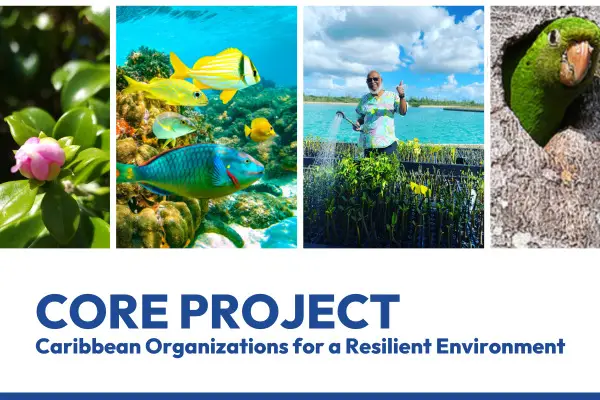
The Caribbean Organizations for a Resilient Environment (CORE) Project aims to increase resilience to climate change of vulnerable groups in 8 beneficiary countries across the Caribbean: Belize, Dominica, Grenada, Guyana, Jamaica, St. Lucia, St. Vincent and the Grenadines, and Suriname.
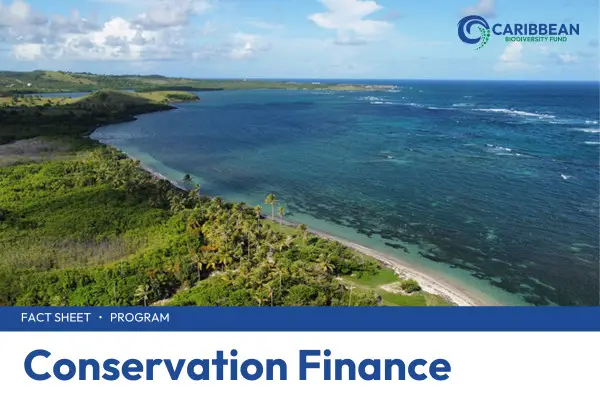
The Conservation Finance Program focuses on the provision of funding towards the protection and management of biodiversity and natural resources and is mainly supported through the Endowment Fund. The proceeds of this Fund are invested in country-based sub-accounts and are channeled through partner National Conservation Trust Funds (NCTFs), who in turn lead grant-making programs at the national level.